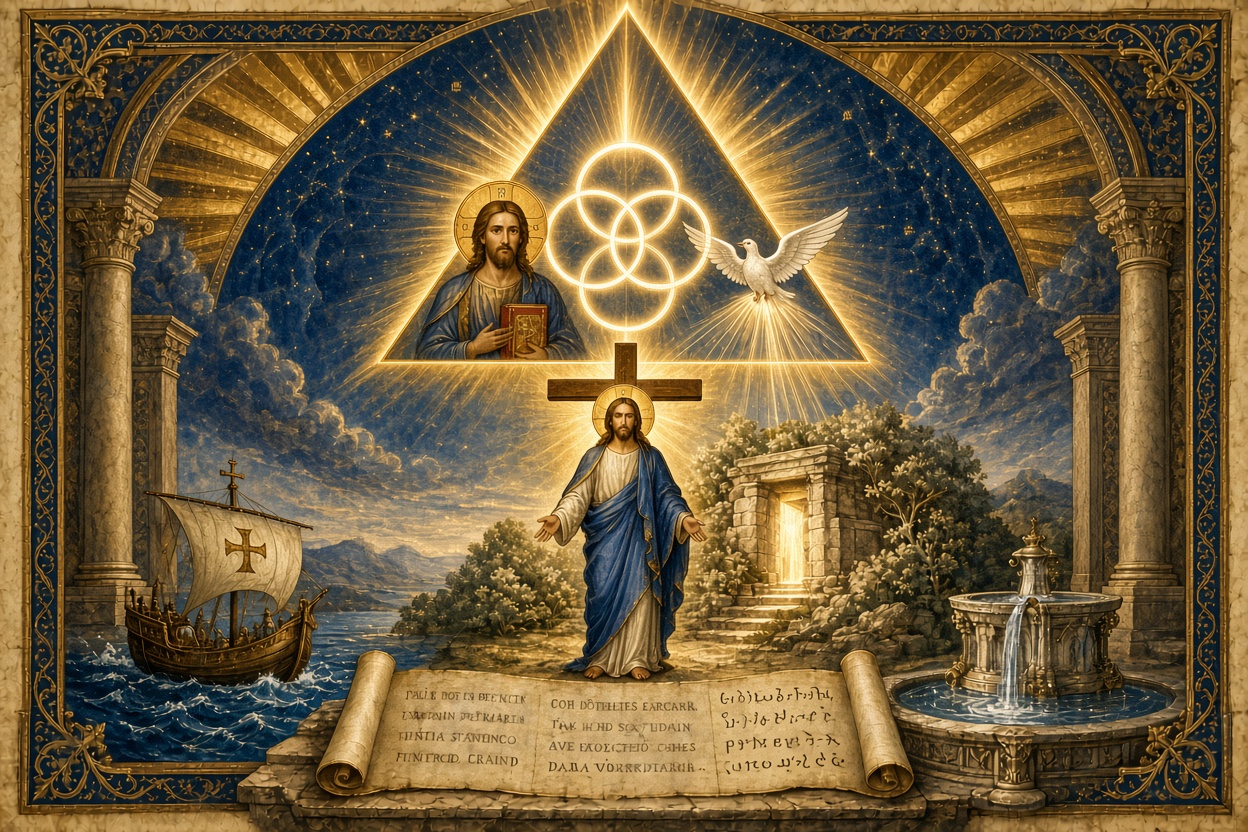
To understand this we need to know the source of the defining elements of Christianity. From there we can determine the essential elements and how they apply to the individual.
What we do know is that a “Christian” is not a subjective arbitrary label self-applied to anything. Because we can recognize limitations and a narrowing of factors we can then see what defines those limiting boundaries and what narrows the definition of what it is, a Christian.
The Person of Jesus
Before Jesus and without Jesus, historically and in all reality, there is no Christian. Thus, Jesus is the primary defining factor when it comes to determining what a Christian is.
Apostolic Witness
How do we even know anything about Jesus? Through the writings of the Apostles who were the eye-witnesses to the person of Jesus. Thus, the Apostolic Witness is an essential element to the primary defining factor to determine what a Christian is.
Their witness was presented in what they taught, what they wrote, and how they lived, in that they followed the example, teachings, and life of Jesus himself. Their disciples after them saw and heard their witness first hand and passed it on to the next generation of followers of the ultimate example: Jesus.
- APOSTOLIC NATURE
This brings us to the first critical element of what defines Christian: Unity and Agreement with the Apostolic example of Jesus himself.
The reason why Unity and Agreement are required and necessary conditions is because without these, how else could one be the definition of Christian if the person of Jesus is the absolute primary defining factor? How else could one know the person of Jesus if it were not for the knowledge from the Apostles? Thus, if the Apostles said ‘Jesus said X‘ than it must be accepted that Jesus actually said ‘X.’ Disagreeing with their witness is also disunity with them and their witness of the person of Jesus.
Therefore, anyone who is Christian is in unity and agreement with the Apostles. Thus, anyone who is NOT in unity or agreement with the Apostles, cannot be Christian and is not Christian.
Even before we look into their writings, we can already see that any religion or faith that rejects the Apostolic Witness and the apostolic example that which imitates the person of Jesus himself, IS NOT Christian, even if they attempt to claim to be.
2. APOSTOLIC WITNESS
This now points us toward the second critical element of Christian: Unity and Agreement with the Apostolic Witness, which is their writings and teachings.
The only way we know anything about the person of Jesus, who is the primary element of Christian, is from the teachings of the Apostles. From their writings alone we see that the Jewish Sacred Writings (Old Testament) were valid and are the authority of God, God’s word. We know this because Jesus is recorded by his Apostles as affirming such. Thus, a Christian must accept the Old Testament as the word of God just as the Apostles did at the revelation of such from Jesus himself.
This is how we know that various forms of Gnosticism is NOT Christian. This is how we know that Marcionism is NOT Christian and how we can know that the Church was correct to determine that Marcion of Snope was a Heretic. He taught the the Old Testament was not of God but taught something else. This “something else” was in disagreement and disunity from the Apostolic Witness and contradicting the witness of the person of Jesus himself. Therefore, he and his teachings were not Christian.
This application of Apostolic Witness on those who made different claims brought us into the third essential element of Christian: the Submission to the Authority of the Apostles and the New Testament.
3. APOSTOLIC AUTHORITY
What gives the Apostles authority? It’s not what, but who. The person of Jesus chose them and made them eye-witnesses to his words, works, and power. Then charged them with proclaiming his message, making disciples in his name, and reaching all the ends of the earth, through them. This holds true today, as it is still their words (directed by the Holy Spirit and “God breathed“) in the New Testament that is reaching all the ends of the earth and it is what they witnessed and proclaimed that we also proclaim today.
The simple fact that they were first-hand eye-witnesses also grants them the highest form of credibility and authority as the primary subject matter experts. Would you ask a young kid looking at the Moon through his $20 Walmart Telescope questions about the orbital velocity or the gravitational mass of the Moon, or would you ask the man who directly studied and walked on the Moon itself? The Apostles, metaphorically, walked on the Moon itself and are the primary sources of first-hand knowledge of it. This alone lends them the highest form of authority on the subject.
The third essential cause for their authority is the fact that the Holy Spirit spoke through them and worked directly through them. Not in any modern sense. No one can write new updated or add to Apostolic Holy Scripture and no one is raising anyone from the dead through the power of the Holy Spirit working through them. Self-proclaimed “faith healers” don’t even step foot in hospitals to heal anyone. Thus, the Holy Spirit validated THEM, the Apostles, and their divinely granted authority in their writings and teachings.
Disagreeing with Jesus’ choosing, the apostolic direct source first-hand expert knowledge, and the Holy Spirit’s validation is by all means a rejection of the person of Jesus and his appointed-authoritative Apostles. No one can be Christian and reject the person of Jesus’ appointments.
Now we can more clearly see what a Christian is:
A Christian is one who is in unity and agreement with the Apostolic Witness of the person Jesus Christ; who submits to their divinely granted and divinely validated authority, and agrees that the Old and New Testaments are the revealed words of God.
Now, we can definitively say that anyone who disagrees with the Apostolic Witness and or rejects the authority of the Apostolic writings, are not Christian. They are not in unity with Jesus’ Apostles who lived, spoke, and taught the things of the person of Jesus himself. To claim that they are incomplete, corrupted, and or false, is to reject them and their witness of the person of Jesus.
With this simplistic definition, we can now look at what exactly the Apostles themselves record Jesus saying and what they, in their own granted authority say to help narrow and better define Christian.
The Apostolic Witness of what Jesus Christ revealed is this:
- The Old Testament (the Law and the Prophets) point and lead to Him. [John 1:45, 5:39, 46; Luke 24:27, 44; Acts 10:43, 28:23; Romans 3:21; Galatians 3:24]
- The Old Testament (the law, feasts, and customs) is fulfilled in Him. [Matthew 5:17-18; Luke 24:27, 44; John 1:45, 5:39, 46; 7:37–39; Mark 7:18–19; Acts 10:9–16; Hebrews 8:5–6, 13, 10:1–10; Romans 10:4; Colossians 2:16–17; Galatians 3:23–25; 1 Corinthians 5:7, 20; Ephesians 2:14–15]
- Including specific Old Testament Prophesies about Him: Matthew 1:22–23 = Isaiah 7:14; Matthew 2:15 = Hosea 11:1; John 19:36 = Exodus 12:46; Numbers 9:12
- Including specific Old Testament Prophesies about Him: Matthew 1:22–23 = Isaiah 7:14; Matthew 2:15 = Hosea 11:1; John 19:36 = Exodus 12:46; Numbers 9:12
- The Law proves and points to the need for a Messiah and savior from sin. He is the Messiah and savior [Isaiah 53:4–6 & 53:10–12; Jeremiah 31:31–34; Matthew 1:21; John 1:29; Acts 13:38–39; Romans 3:19–26, 7:7–13, 8:1–4; Hebrews 4:4–5, 10:1–4; Galatians 3:10–11 & 3:21–24; James 2:10]
- He is from God and of God, who came down from heaven and clothed himself in flesh; God incarnate. [Isaiah: 7:14; 9:6; Micah: 5:2; Matthew: 1:23; Luke: 1:35; John: 1:1–3, 14, 18; 3:13, 16–17, 31; 6:33, 38, 51, 62; 8:23, 42, 58; 10:30, 36; 14:9–11; 16:27–28; 17:5; 20:28; Acts 20:28; Romans 1:3–4; 8:3; 9:5; 1 Corinthians 15:47; 2 Corinthians 5:19; 8:9; Galatians 4:4; Philippians 2:5–8; Colossians 1:15–19; 2:9; 1 Timothy 3:16; Titus 2:13; Hebrews 1:1–3, 8; 2:14, 17; 10:5; 1 John 1:1–2; 4:2–3, 9, 14; 5:20; 2 John 1:7; Revelation 1:8, 1:17–18; 22:13]
- He proved his divine power and divine authority in his works, miracles, and teachings; doing things only God could do. [Matthew 7:28–29; 8:26–27; 9:2–6; 11:4–5; 12:8, 12:28; 14:25–33; 17:1–8; 28:18; Mark 1:22, 27; 2:5–12; 4:39–41; 5:35–42; 6:48–51; Luke 4:32, 36; 5:20–26; 7:14–16, 22, 48–49; 8:24–25, 54–55; 9:28–36; John 2:1–11; 3:2; 5:17–23, 36; 6:19–21; 7:46; 9:1–7, 32–33; 10:25, 37–38; 11:25–26, 43–44; 14:10–11; 15:24; 20:30–31; Acts: 2:22; 10:38; Romans: 1:4; Ephesians: 1:19–22; Colossians: 1:16–17; 2:10, 15; Hebrews: 1:2–3; 2 Peter: 1:16–18]
- His purpose of the incarnation was to be the perfect sacrificial lamb for the sins of the world once and for all. [Genesis: 22:8; Exodus: 12:3–13; Isaiah: 53:4–12; Matthew: 1:21; 20:28; 26:28; Mark: 10:45; 14:24; Luke: 19:10; 22:19–20; John: 1:29, 36; 3:16–17; 6:51; 10:11, 15, 17–18; 11:49–52; 19:36; Acts: 8:32–35; 20:28; Romans: 3:24–26; 4:25; 5:6–10, 18–19; 6:10; 8:3, 32; 1 Corinthians: 5:7; 15:3; 2 Corinthians: 5:14–15, 19, 21; Galatians: 1:4; 2:20; 3:13; 4:4–5; Ephesians: 1:7; 5:2; Colossians: 1:14, 20–22; 2:14; 1 Thessalonians: 5:9–10; 1 Timothy: 1:15; 2:5–6; Titus: 2:14; Hebrews: 1:3; 2:9, 14, 17; 7:26–27; 9:12, 14–15, 22, 26–28; 10:10, 12, 14; 13:12; 1 Peter: 1:18–20; 2:24; 3:18; 1 John: 2:2; 3:5, 8, 16; 4:9–10, 14; Revelation: 1:5; 5:6, 9, 12; 7:14; 12:11; 13:8]
- He died in his flesh, was buried, making payment for sin through his perfect blood; atoning for sin. [Isaiah: 53:5, 7–12; Zechariah: 12:10; 13:1; Matthew: 26:28; 27:45–50, 57–60; Mark: 14:24; 15:33–37, 42–46; Luke: 22:20, 44; 23:44–46, 50–53; John: 19:30, 33–35, 38–42; Acts: 2:23, 29; 13:28–29; 20:28; Romans: 3:24–25; 4:25; 5:6, 8–10; 6:3–4, 10; 8:3; 1 Corinthians: 11:25; 15:3–4; 2 Corinthians: 5:14–15, 21; Galatians: 1:4; 2:20; 3:13; Ephesians: 1:7; 2:13–16; 5:2; Philippians: 2:8; Colossians: 1:14, 20–22; 2:14; 1 Timothy: 2:6; Hebrews: 2:9, 14, 17; 9:12, 14–15, 22, 26, 28; 10:10, 12, 19–20; 13:12; 1 Peter: 1:2, 18–19; 2:24; 3:18; 4:1; 1 John: 1:7; 2:2; 4:10; Revelation: 1:5; 5:9; 7:14; 12:11]
- He rose from the dead 3 days later, defeating death, validating his authority over life and death itself. [Psalm: 16:10; Isaiah: 25:8; 53:10–12; Hosea: 6:2; 13:14; Matthew: 12:39–40; 16:21; 17:22–23; 20:18–19; 28:1–10, 18; Mark: 8:31; 9:31; 10:33–34; 16:1–7, 9; Luke: 9:22; 18:31–33; 24:1–8, 21, 34, 36–43, 46; John: 2:19–22; 5:21, 24–29; 10:17–18; 11:25–26; 20:1–9, 14–20, 24–29; Acts: 2:24, 27, 31–32; 3:15; 4:10, 33; 5:30; 10:39–41; 13:30, 33–37; 17:3, 31; 26:22–23; Romans: 1:4; 4:24–25; 6:4–5, 9; 8:11, 34; 10:9; 14:9; 1 Corinthians: 6:14; 15:3–8, 12–23, 54–57; 2 Corinthians: 4:14; 5:15; 13:4; Galatians: 1:1; Ephesians: 1:19–22; Philippians: 2:8–11; 3:10; Colossians: 1:18; 2:12, 15; 1 Thessalonians: 1:10; 4:14; 2 Timothy: 1:10; 2:8; Hebrews: 2:14–15; 7:16, 25; 13:20; 1 Peter: 1:3, 21; 3:18, 21–22; Revelation: 1:5, 17–18; 2:8]
- He ascended to heaven, back to the Father, where he reigns as King of Kings and Lord of Lords for eternity. [Psalm: 2:6–9; 45:6; 68:18; 110:1–2; Isaiah: 9:6–7; Daniel: 7:13–14; Matthew: 22:44; 25:31; 26:64; 28:18; Mark: 12:36; 14:62; 16:19; Luke: 1:32–33; 20:42–43; 22:69; 24:50–51; John: 3:13; 6:62; 13:1, 3; 14:2–3, 12, 28; 16:5, 10, 28; 17:5, 11, 13; 20:17; Acts: 1:9–11; 2:32–36; 3:21; 5:31; 7:55–56; Romans: 8:34; 1 Corinthians: 15:24–25; Ephesians: 1:20–22; 4:8–10; Philippians: 2:9–11; Colossians: 3:1; 1 Timothy: 3:16; 6:15; Hebrews: 1:3, 8, 13; 4:14; 6:19–20; 7:26; 8:1; 9:24; 10:12–13; 12:2; 1 Peter: 3:22; Revelation: 1:5; 3:21; 5:5–7, 12–13; 11:15; 17:14; 19:16; 22:1, 3 ]
- He is the Son of God, sharing the same nature and essence as God the Father; in authority, nature, and power. [Psalm: 2:7, 12; 45:6–7; Isaiah: 9:6; Matthew: 3:17; 11:27; 14:33; 16:16–17; 17:5; 26:63–64; 28:18–19; Mark: 1:1, 11; 3:11; 9:7; 14:61–62; 15:39; Luke: 1:32, 35; 3:22; 9:35; 10:22; 22:70; John: 1:1–3, 14, 18, 34, 49; 3:16–18, 35–36; 5:17–27; 6:40; 8:19, 58; 10:28–30, 33, 36–38; 11:27; 14:7–11; 16:15; 17:1–5, 10, 21–22; 20:28, 31; Acts: 9:20; 13:33; Romans: 1:3–4; 8:3, 29, 32; 9:5; 1 Corinthians: 1:9; 8:6; 15:24–28; 2 Corinthians: 1:19; 4:4; Galatians: 2:20; 4:4; Ephesians: 4:13; Philippians: 2:5–6; Colossians: 1:13, 15–19; 2:9–10; 1 Thessalonians: 1:10; Hebrews: 1:1–6, 8, 10–12; 3:5–6; 4:14; 5:5, 8; 7:3; 2 Peter: 1:17; 1 John: 1:3, 7; 2:22–24; 3:8, 23; 4:9–10, 14–15; 5:5, 9–13, 20; 2 John: 1:3, 9; Revelation: 1:8, 17–18; 2:18; 3:21; 5:13; 22:1, 3, 13]
- He is the Son of Man, taking on the flesh and human nature with limitations but without sin; born of a virgin, taking the woman’s flesh but conceived into this world by the Holy Spirit. [Genesis: 3:15; Isaiah: 7:14; 53:2–3, 9; Daniel: 7:13; Matthew: 1:18–25; 4:1–2; 8:20, 24; 9:6; 16:13; 20:28; 26:37–38; Mark: 4:38; 6:3; 10:45; 11:12; 14:33–34; Luke: 1:26–35; 2:6–7, 40, 52; 4:2; 19:10; 22:44; 23:41; 24:39; John: 1:14, 51; 3:13–14; 4:6–7; 8:46; 11:33, 35; 12:27; 19:28; Acts: 2:22; 3:14; 7:56; Romans: 1:3; 5:15, 19; 8:3; 1 Corinthians: 15:21, 47; 2 Corinthians: 5:21; Galatians: 4:4; Philippians: 2:7–8; Colossians: 1:22; 2:9; 1 Timothy: 2:5; 3:16; Hebrews: 2:9, 14, 17–18; 4:15; 5:7–8; 7:26; 10:5; 1 Peter: 1:19; 2:22; 3:18; 4:1; 1 John: 3:5; 4:2–3; 2 John: 1:7]
Those 11 Apostolic doctrines are in the positive, what IS a true Christian belief, but the Apostles also notated in the negative as well, what is NOT Christian.
- Exclusivity of Christ: Salvation is found only through Jesus (John 14:6; Acts 4:12). Rejecting or disowning Jesus means rejecting God the Father (Matthew 10:33; Luke 9:26; John 5:23; 1 John 2:22–23), remaining under divine wrath and condemnation (John 3:18, 36; 8:24; 12:48), and lacking spiritual life (1 John 5:10, 12). True faith requires believing in one’s heart and confessing Jesus as Lord (Romans 10:9–10; 1 Corinthians 16:22).
Non or false claims of Christian will reject the Lordship of Jesus. - Jesus is called ‘Lord’: Matthew: 8:25; 14:28, 30; 16:22; 17:4; 18:21; 26:22; Luke: 5:8; 9:54, 61; 10:17, 40; 11:1; 12:41; 17:5; 22:33, 38, 49; John: 6:68; 11:3, 12, 21, 27, 32, 34, 39; 13:6, 9, 13–14, 25, 36–37; 14:5, 8, 22; 20:2, 13, 18, 20, 25, 28; 21:7, 12, 15–17, 20–21; Acts: 1:6, 21, 24; 2:36; 4:33; 7:59–60; 9:5, 10, 13, 17; 10:36; 11:16–17, 20; 15:11, 26; 16:31; 20:21, 24, 35; 22:8, 10; Romans: 1:4, 7; 10:9; 13:14; 14:9; 1 Corinthians: 1:2–3; 8:6; 12:3; 2 Corinthians: 4:5; Philippians: 2:11; 3:8; 2 Peter: 1:11, 14, 16; 3:18; Jude: 1:4, 17, 21, 25; Revelation: 11:8; 17:14; 19:16; 22:20–21
Non or false claims of Christian will not accept Jesus as their Lord. - Jesus is called the Son of God: Matthew: 14:33; 16:16; John: 1:34, 49; 6:69; 11:27; 20:31; Acts: 9:20; 13:33; Romans: 1:3–4, 9; 5:10; 8:3, 29, 32; 1 Corinthians: 1:9; 15:28; 2 Corinthians: 1:19; Galatians: 1:16; 2:20; 4:4, 6; Ephesians: 4:13; Colossians: 1:13; 1 Thessalonians: 1:10; 1 John: 1:3, 7; 2:22–24; 3:8, 23; 4:9–10, 14–15; 5:5, 9–13, 20; 2 John: 1:3, 9; Revelation: 2:18
Non or false claims of Christian will reject him as the Son of God the Father. - Jesus is called God: Isaiah 9:6; Matt 1:23; John 1:1, 18; 20:28; Acts 20:28; Romans 9:5; Titus 2:13; 2 Peter 1:1; 1 John 5:20; Jude 5; Hebrews 1:1–8 (Worship: Matt 2:11, 14:33, 28:9; Acts 10:25–26; Revelation 19:9–10)
Non or false claims of Christian will reject the deity of Jesus, thus won’t worship him. - Incarnation and Apostolic Truth: Denying that Jesus came in the flesh or departing from apostolic teaching marks a person as an antichrist or false teacher who does not have God (1 John 4:1–3, 5–6; 2 John 1:7, 9). Distorting the gospel of grace or attempting to be justified by the Mosaic Law severs a person from Christ (Galatians 1:6–9; 5:4).
Non or false claims of Christian will deny that Jesus died on the cross or even came in the flesh. They will justify their own sense of rightness by their own efforts and works and reject the dependence on the finished work of Jesus. - No Neutrality: Jesus states that anyone who is not actively with him is against him (Matthew 12:30; Luke 11:23).
Non or false claims of Christian will actively or subtly oppose the desires, teachings, and claims of Jesus in a humanistic intervened virtue of acceptance with tolerance for evil and wickedness. - Words vs. Action: Calling Jesus “Lord” or even performing miracles in his name will not save those who practice lawlessness and fail to do God’s will (Matthew 7:15–23; Luke 6:46; 13:24–27). Claiming to know God while habitually disobeying his commands makes a person a liar (Titus 1:15–16; 1 John 2:4).
Non or false claims of Christian will live in disobedience to the Apostolic Witness. - Dead Faith vs. Living Faith: Faith without accompanying deeds is dead and cannot save (James 2:14–20, 26). Those who refuse to bear spiritual fruit are cut off and discarded (John 15:2, 6), and believers are warned to examine themselves to verify that Christ is actually in them (2 Corinthians 13:5).
Non or false claims of Christian will not do good works in faith but works of the flesh for worldly conformity or to satisfy their own sense of what they feel is right. - Living by the Flesh vs. the Spirit: Unbelievers are spiritually dead, alienated from God, darkened in understanding, and governed by sinful desires (Romans 8:5–9; Ephesians 2:1–3, 12; 4:17–19; Colossians 1:21). Habitual, unrepentant practices of sexual immorality, idolatry, greed, drunkenness, slander, and similar sins characterize those who will not inherit God’s kingdom (1 Corinthians 6:9–10; Galatians 5:19–21; Ephesians 5:5–6; Revelation 21:8, 27; 22:15).
Non or false claims of Christian will justify their own works and desires and live unrepentant lives, seeing no dire need for the Messiah or to be born again and transformed in the mind and heart. - Walking in Light and Love: Claiming fellowship with God while walking in spiritual darkness or hating fellow believers is self-deception (1 John 1:6, 8, 10; 2:9; 3:6, 8–10, 14–15; 4:8, 20). Loving the world’s values over God makes a person God’s enemy (James 4:4; 1 John 2:15), and neglecting basic family responsibilities amounts to denying the faith (1 Timothy 5:8)
Non or false claims of Christian will conform to the whims of worldly norms, values, and carnal morals. They will oppose those who proclaim the Apostolic Witness that conflicts with their worldly desires. - False Prophets and Wolves: Deceivers often disguise themselves as servants of righteousness while promoting destructive heresies, greed, sensuality, and division (2 Corinthians 11:13–15; 1 Timothy 4:1–2; 6:3–5; 2 Timothy 3:1–5, 8; Titus 3:10–11; 2 Peter 2:1–3, 12–22; Jude 1:4, 10–13, 18–19).
Non or false claims of Christian are self-righteous in their understandings and do not seek unity, peace, and conformity to the Apostolic Witness in the Church that is the Body of Christ. - Nominal and Dead Churches: The letters to the churches in Revelation rebuke communities and leaders who tolerate false teaching, compromise with immorality, claim spiritual heritage while opposing truth (“synagogue of Satan”), or maintain a reputation of being alive while being spiritually dead or lukewarm (Revelation 2:2, 9, 20–23; 3:1, 9, 15–16).
Non or false claims of Christian will participate in self-proclaimed Churches that conform to the world and it’s carnal desires; who fear man more than God or desire the acceptance of man more than God. - Apostasy and Hardened Hearts: Turning away from the living God, rejecting the truth after receiving knowledge of it, or shrinking back in unbelief proves a person never truly belonged to the community of faith and leaves them facing judgment (1 Timothy 1:19–20; 2 Timothy 2:12; Hebrews 2:1–3; 3:12; 6:4–8; 10:26–29, 38–39; 1 John 2:18–19).
Non or false claims of Christian will eventually invent their own religion, create their own churches, worship a Jesus in their own image, and or leave the Apostolic faith all together.
The very things the Apostles taught that is recorded in their witness statements, i.e. The New Testament, we also see expressed in the early Church Creeds as well. From the Apostle’s Creed, Nicene Creed, to the Constantinople Creed, we see the Apostolic Witness still contained in them.
The Creed of Constantinople (381 AD)
We believe in one God (Deuteronomy 6:4; 1 Corinthians 8:6), the Father Almighty (2 Corinthians 6:18; Revelation 1:8), Maker of heaven and earth, and of all things visible and invisible (Genesis 1:1; Nehemiah 9:6; Colossians 1:16).
And in one Lord Jesus Christ (1 Corinthians 8:6; Philippians 2:11), the only-begotten Son of God (John 1:14, 18; 3:16), begotten of the Father before all ages (John 1:1–2; 17:5; Colossians 1:15, 17), Light of Light (John 1:4–9; 8:12; 1 John 1:5), true God of true God (John 1:1; 20:28; Romans 9:5; 1 John 5:20), begotten, not made, of one essence (homoousios) with the Father (John 5:18; 10:30; Philippians 2:6; Colossians 2:9; Hebrews 1:3); By whom all things were made (John 1:3; 1 Corinthians 8:6; Colossians 1:16; Hebrews 1:2); Who for us and for our salvation came down from heaven (John 3:13, 17; 6:38, 51; 1 Timothy 1:15), And was incarnate by the Holy Spirit of the Virgin Mary, and was made man (Isaiah 7:14; Matthew 1:18–23; Luke 1:35; John 1:14; Galatians 4:4; Philippians 2:7); He was crucified for us under Pontius Pilate, and suffered, and was buried (Matthew 27:2, 35, 57–60; Mark 15:15, 24, 46; 1 Corinthians 15:3–4; 1 Peter 2:24; 3:18), And the third day he rose again, according to the Scriptures (Psalm 16:10; Matthew 28:1–7; Luke 24:45–46; Acts 2:24, 31–32; 1 Corinthians 15:4), And ascended into heaven, and sits at the right hand of the Father (Psalm 110:1; Mark 16:19; Luke 24:51; Acts 1:9; 2:33; Hebrews 1:3; 10:12); From there he shall come again, with glory, to judge the living and the dead (Matthew 24:30; 25:31–32; Acts 1:11; 10:42; 2 Timothy 4:1; 1 Peter 4:5); Whose kingdom shall have no end (2 Samuel 7:12–13; Isaiah 9:7; Daniel 7:14; Luke 1:33; Revelation 11:15).
And in the Holy Spirit, the Lord and Giver of life (Genesis 1:2; Job 33:4; John 6:63; Romans 8:2, 11; 2 Corinthians 3:6, 17), Who proceeds from the Father (John 14:26; 15:26), Who with the Father and the Son together is worshiped and glorified (Matthew 28:19; 2 Corinthians 13:14; Revelation 4:8), Who spoke by the prophets (2 Samuel 23:2; Ezekiel 11:5; Acts 1:16; 28:25; 1 Peter 1:10–11; 2 Peter 1:21).
In one holy, catholic (universal), and apostolic Church (Matthew 16:18; John 17:20–21; Acts 2:42; Ephesians 2:19–22; 4:4–6; 1 Peter 2:9); We acknowledge one baptism for the forgiveness of sins (Acts 2:38; 22:16; Romans 6:3–4; Ephesians 4:5; 1 Peter 3:21); We look for the resurrection of the dead (Isaiah 26:19; Daniel 12:2; John 5:28–29; 11:25; 1 Corinthians 15:20–23, 51–54; 1 Thessalonians 4:16), And the life of the world to come.
Amen (Isaiah 65:17; Mark 10:30; John 3:16; 2 Peter 3:13; Revelation 21:1–4; 22:5).
THEREFORE, a Christian is:
One who is in unity and agreement with the Apostolic Witness of the God-Man Jesus Christ; submits to Apostolic Authority divinely granted and divinely validated, and agrees that the Old and New Testaments are the holy and sacred revealed words of God, which is simplistically summarized in the creeds of the Apostolic Church: the Apostles Creed, the Nicene Creed, the Constantinople Creed, the Chalcedonian Creed, and the Athanasian Creed.
THUS, the larger Apostolic Christian Beliefs is this:
We believe and confess the universal faith, which is this: that we worship one God in Trinity, and Trinity in Unity, neither confounding the persons nor dividing the substance. For there is one Person of the Father, another of the Son, and another of the Holy Spirit. But the Godhead of the Father, of the Son, and of the Holy Spirit is one: the glory equal, the majesty co-eternal. Such as the Father is, such is the Son, and such is the Holy Spirit: the Father uncreated, the Son uncreated, the Holy Spirit uncreated; the Father infinite, the Son infinite, the Holy Spirit infinite; the Father eternal, the Son eternal, the Holy Spirit eternal. And yet they are not three eternals, but one Eternal; not three uncreated or three infinites, but one Uncreated and one Infinite. The Father is made of none, neither created nor begotten. The Son is of the Father alone, not made nor created, but eternally begotten. The Holy Spirit is of the Father and of the Son, neither made, nor created, nor begotten, but eternally proceeding. So there is one Father, not three Fathers; one Son, not three Sons; one Holy Spirit, not three Holy Spirits. And in this Trinity none is before or after another; none is greater or less than another; but the whole three Persons are co-eternal together and co-equal. So that in all things, as is aforesaid, the Unity in Trinity and the Trinity in Unity is to be worshiped.
We believe in one God, the Father Almighty, Maker of heaven and earth, and of all things visible and invisible.
And in one Lord Jesus Christ, the only-begotten Son of God, begotten of the Father before all ages, God from God, Light from Light, true God from true God, begotten, not made, consubstantial with the Father; by whom all things were made. Who for us men and for our salvation came down from heaven, and was incarnate by the Holy Spirit of the Virgin Mary, and was made man. He is perfect God and perfect man, of a reasonable soul and human flesh subsisting; equal to the Father as touching His Godhead, and inferior to the Father as touching His manhood. Who, although He be God and Man, yet He is not two, but one Christ: one, not by conversion of the Godhead into flesh, but by taking of the manhood into God; one altogether, not by confusion of substance, but by unity of Person. For as the reasonable soul and flesh is one man, so God and Man is one Christ.
Following the holy Fathers, we all with one consent teach men to confess one and the same Son, our Lord Jesus Christ, the same perfect in Godhead and also perfect in manhood; truly God and truly man, of a reasonable soul and body; consubstantial with the Father according to the Godhead, and consubstantial with us according to the Manhood; in all things like unto us, without sin; eternally begotten before all ages of the Father according to the Godhead, and in these latter days, for us and for our salvation, born of the Virgin Mary, the Mother of God, according to the Manhood; one and the same Christ, Son, Lord, Only-begotten, to be acknowledged in two natures, without confusion, without change, without division, without separation; the distinction of natures being by no means taken away by the union, but rather the property of each nature being preserved, and concurring in one Person and one Subsistence, not parted or divided into two persons, but one and the same Son, and only-begotten, God the Word, the Lord Jesus Christ.
For our sake He was crucified under Pontius Pilate; He suffered, died, and was buried; He descended to the dead. On the third day He rose again according to the Scriptures; He ascended into heaven and is seated at the right hand of the Father. He will come again in glory to judge the living and the dead, and His kingdom will have no end.
And we believe in the Holy Spirit, the Lord and Giver of Life, who proceeds from the Father (and the Son), who with the Father and the Son together is worshiped and glorified, who spoke by the prophets.
We believe in one holy universal and apostolic Church. We acknowledge one Baptism for the remission of sins. We look for the resurrection of the dead, the communion of saints, the forgiveness of sins, the resurrection of the body, and the life of the world to come.
Amen.
A Unified Creed – (Synthesizing the Apostles’ Creed, the Creed of Nicaea 325, the Niceno-Constantinopolitan Creed of 381, the Definition of Chalcedon 451, and the Athanasian Creed)
BUT not all Christians fully understand and comprehend the deeper matters of their faith. Even the Apostolic Witness recognizes this sort of gradual comprehension, which is described as a birth, growth and maturing of the spiritual life similar to the physical life of development, but of the spirit and of faith.
The spiritual “birth” of a Christian, being “born again,” (John 3:3-7; 1 Peter 1:2-4, 22-23; Colossians 2:13) begins at repenting and believing (Matt 3:2, 4:17; Mark 1:15, 16:16; Luke 13:3; Acts 2:38, 3:19, 8:22, 17:30, 20:21; Romans 10:9; 1 John 1:9; 2 Tim 2:25; Rev 2:5). They then get fed the spiritual “milk” (Hebrews 5:13-14) like an infant and child. Over time they grow and mature in the faith and feed on the “meat” of the knowledge of God (Eph 4:11-16; Hebrews 6:1; James 1:2-5; Matt 5:48).
THEREFORE there is a starting point at which someone is changed from being dead in sin, spiritually blind, unable to see and enter the Kingdom to being spiritually birthed, made alive in Christ, and now able to see and enter the kingdom. This starting point begins with repentance and belief.
THUS all Christians must first recognize their own sinfulness, repent of it, and comprehend their need for God’s own intervention in their life, and believe in God’s intervention. Without even seeing the need, there is no belief in the solution to the need. But once the deep spiritual need is recognized, repentance and belief in the divine solution must follow too.
- Recognize ones own fallen state, objectively proven by the imperfect failed ability to perfectly keep God’s laws through ones own efforts.
- Repent of ones own sinful fallen state and violations of God’s laws. Where mercy and forgiveness for this sinful state is sought in true humility and sorrow for offending the eternal holiness of God.
- Belief in the only possible solution to their fallen state and receive the gift of faith in the person and work of the Son of God (the Gospel) on their behalf for their fallen state.
Belief in The Gospel is the truth that is the catalyst of saving faith and spiritual birth.
The Gospel:
- You are a sinner, unholy, unrighteous, imperfect who needs to be made holy, righteous, and perfect to heal and have a relationship with God.
- You are unable to cause yourself to become holy, righteous, and perfect and all the things you have done that are unholy, unrighteous, and imperfect has infinity offended the holiness and righteousness of the holy, righteous, perfect, and just God.
- This continued state of sin (unholiness, unrighteousness, and imperfection) prevents healing and is a sickness that can’t stand in the presence of God. All self works and efforts are stained, infected, and tainted by this state of sin.
- God, being perfect in love, sent his own Son to be incarnate in the flesh to live the perfect sinless life that you cannot live. To be the holy, righteous, and perfect Son of Man that you could not be, for you.
- The Son of God, Jesus Christ, died on the cross as the payment for your sins because God is perfectly just. Jesus died for you so that you may receive mercy and forgiveness for your sins. Jesus died to defeat sin and it’s reign over you. This is purely by the grace of God alone that He did this for you and not because of anything you tried to do yourself.
- Jesus Christ rose from the dead three days later defeating death itself, bringing life to the spiritually dead, proving that he has the power and authority over life and death as the divine Son of God being the same nature and essence of God.
- All of which was attested to and witnessed by real people in real time in history, his disciples and his Apostles, who were charged by Jesus Christ with proclaiming this great news to the whole world, for all time, all the way to you, now.
- His message and call to repent and believe is a free gift and invitation to a healed and restored relationship with God and the inheritance of eternal life with God the Father forevermore.
To sum it up:
As an imperfect sinner, your own efforts are tainted by sin and cannot bridge the gap created by offending a perfectly holy and just God. Because you are unable to heal or make yourself righteous, God in His perfect love sent His divine Son, Jesus Christ, to live the sinless life you could not live. Out of pure grace, Jesus died on the cross to pay the penalty for your sins, defeating sin’s power so you could receive mercy and forgiveness. Three days later, He rose from the dead, proving His authority over life and death as the true Son of God—a historical reality witnessed and proclaimed by His Apostles. Today, this message extends to you as a free invitation to repent, believe, and receive a restored relationship with God alongside eternal life.
The Apostle Paul stated it more simply:
“I handed down to you as of first importance what I also received, that Christ died for our sins according to the Scriptures, 4 and that He was buried, and that He was raised on the third day according to the Scriptures, 5 and that He appeared to Cephas, then to the twelve. 6 After that He appeared to more than five hundred brothers and sisters at one time, most of whom remain until now, but some have fallen asleep; 7 then He appeared to James, then to all the apostles; 8 and last of all, as to one untimely born, He appeared to me also. 9 For I am the least of the apostles, and not fit to be called an apostle, because I persecuted the church of God. 10 But by the grace of God I am what I am, and His grace toward me did not prove vain; but I labored even more than all of them, yet not I, but the grace of God with me. 11 Whether then it was I or they, so we preach and so you believed.” – 1 Corinthians 15:3-11
Because the Gospel is the defining most important truth of the Christian faith, ANY change to this is NOT Christian and falls out of the defined boundaries of the Christian faith.
The Apostles, in their divinely granted Apostolic Authority make it absolutely clear:
“For if someone comes and proclaims another Jesus than the one we proclaimed, or if you receive a different spirit from the one you received, or if you accept a different gospel from the one you accepted, you put up with it readily enough.“ – 2 Corinthians 11:4
“I am amazed that you are so quickly deserting Him who called you by the grace of Christ, for a different gospel, 7 which is not just another account; but there are some who are disturbing you and want to distort the gospel of Christ. 8 But even if we, or an angel from heaven, should preach to you a gospel contrary to what we have preached to you, he is to be accursed! 9 As we have said before, even now I say again: if anyone is preaching to you a gospel contrary to what you received, he is to be accursed!… 11 For I would have you know, brothers and sisters, that the gospel which was preached by me is not of human invention. 12 For I neither received it from man, nor was I taught it, but I received it through a revelation of Jesus Christ.“ – Galatians 1:6-9, 11-12
Holy Scripture, directed by The Holy Spirit through the mind and pen of Paul the Apostle makes it absolutely clear that there is no other Jesus, no other gospel message, no other prophet or being (even angels) that can bring about anything different or contrary, in his time, our time, or any time in the future.
IF ANY self-proclaimed prophet or spirit or angelic being proclaims a different, another, and or contrary “gospel,” it is false, untrue, and a lie. It is an ungodly unchristian “invention” and NOT a “revelation of Jesus Christ”
THEREFORE Gnosticism, Islam, Mormonism, Jehovah’s Witnesses, and LGBTQ+ (and any explicit sin contrary to the Apostolic Witness) Affirming Religiosity are without a question NON-CHRISTIAN, a DIFFERENT DISTORTED GOSPEL, and ANOTHER JESUS, and in the words of The Apostle, “he is to be accursed! he is to be accursed!“
The Holy Spirit through the Apostle John helps us see those who were once in the church, but really weren’t:
18 Children, it is the last hour; and just as you heard that antichrist is coming, even now many antichrists have appeared; from this we know that it is the last hour. 19 They went out from us, but they were not really of us; for if they had been of us, they would have remained with us; but they went out, so that it would be evident that they all are not of us. – 1 John 2:18-19
This cannot be any more “evident” than witnessing the drift of the United Methodist Church, the Episcopal Church, and the Presbyterian USA Church. These groups have absolutely “went out from us, but they were not really of us; for if they had been of us, they would have remained with us.” At their current doctrinal trajectory they will just become just another ex-christian religious sect like Gnosticism, Mormonsim, and Jehovah’s Witnesses and exist outside of the Apostolic church and be cut off from the Vine.


Let us know what you think!